
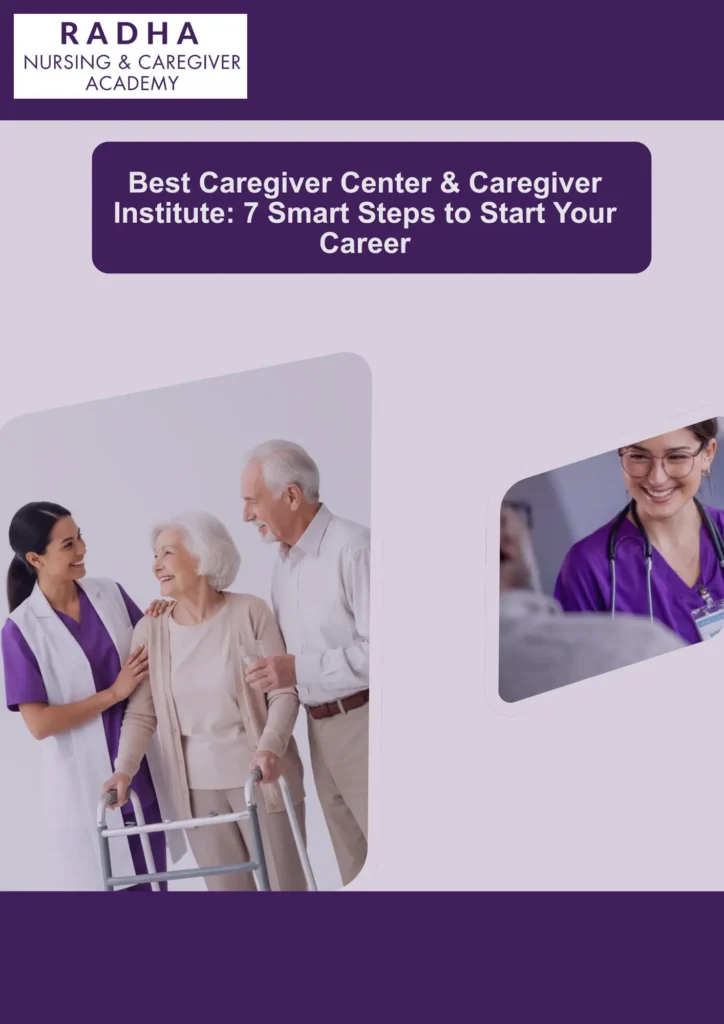
Best Caregiver Center & Caregiver Institute: 7 Smart Steps to Start Your Career
Healthcare services are expanding rapidly across the world. Because of this, trained caregivers are now needed in hospitals, elderly homes, rehabilitation centers, and home healthcare services. A professional Caregiver Institute helps students learn patient care skills, communication techniques, and healthcare responsibilities in a practical way.
Today, many students choose caregiving because it offers meaningful work and long-term career growth. In addition, a trusted Caregiver Center provides hands-on learning that prepares students for real healthcare environments. With proper training, students can confidently support elderly people, patients, and individuals needing daily assistance.
Furthermore, caregiving is not only about medical support. It also includes compassion, patience, and emotional care. Therefore, joining a professional healthcare training program can help students build both personal and professional skills successfully.
Table of Contents
- What is a Caregiver Center?
- What Does a Caregiver Institute Teach?
- Why Choose a Certified Caregiver Institute?
- 7 Smart Steps to Start Your Caregiver Career
- Benefits of Joining a Caregiver Training Center
- Career Opportunities After Caregiver Training
- Caregiver Course in Nepal: What to Expect
- How to Choose the Best Caregiver Center in Kathmandu?
- Skills You Gain from a Caregiver Institute
- Why Caregiver Careers Are Growing Worldwide?
- FAQs

What is a Caregiver Center?
A Caregiver Center is a professional learning institution that trains students to support patients, elderly individuals, and people who require daily healthcare assistance. These centers focus on practical caregiving methods and healthcare safety practices.
Main Functions of a Caregiver Training Center
| Feature | Purpose |
|---|---|
| Practical Sessions | Build healthcare confidence |
| Patient Care Training | Improve caregiving quality |
| Communication Lessons | Support patient interaction |
| Healthcare Guidance | Prepare for workplace duties |
| Safety Education | Prevent healthcare risks |
Moreover, healthcare training institutes teach students how to provide respectful and safe patient support. Students also learn emotional care techniques that improve patient comfort.
Important Learning Areas
- Elderly support techniques
- Personal hygiene care
- Basic healthcare assistance
- Patient communication methods
- Emergency response skills
As a result, students gain the confidence needed to work in professional healthcare environments.
What Does a Caregiver Institute Teach?
A professional Caregiver Institute teaches students how to handle patient care responsibilities effectively. Both classroom learning and practical healthcare activities are included in the training process.
Core Healthcare Subjects
| Subject | Learning Benefit |
|---|---|
| Patient Assistance | Daily caregiving support |
| Hygiene Management | Infection prevention |
| Nutrition Support | Healthy patient care |
| Communication Skills | Better interaction |
| Emergency Care | Quick healthcare response |
Additionally, students learn how to support patients emotionally while maintaining professional healthcare standards.
Practical Training Activities
Practical training is one of the most important parts of caregiving education. Therefore, students practice healthcare tasks in supervised environments.
Hands On Skills
- Assisting patient mobility
- Supporting elderly care
- Monitoring patient conditions
- Maintaining healthcare cleanliness
- Providing emotional comfort
Consequently, learners become prepared for real healthcare situations before entering the workforce.
Why Choose a Certified Caregiver Institute?
Choosing a certified Caregiver Institute is important because professional certification improves trust and career opportunities. Many healthcare employers prefer candidates who complete structured caregiving education.
Benefits of Professional Certification
| Benefit | Outcome |
|---|---|
| Professional Recognition | Better employment chances |
| Practical Knowledge | Improved workplace readiness |
| Patient Care Skills | Higher service quality |
| Career Stability | Long-term opportunities |
| Communication Training | Stronger patient relationships |
Furthermore, certified healthcare training programs follow professional standards that help students gain reliable knowledge and practical experience.
Why Certification Matters
Certification proves that students completed proper healthcare education and patient care training successfully.
Employer Advantages
- Better healthcare understanding
- Strong communication abilities
- Professional caregiving knowledge
- Workplace discipline
- Practical patient support experience
Therefore, completing certified caregiver education can help students build successful careers locally and internationally.
7 Smart Steps to Start Your Caregiver Career
Starting a caregiving career becomes easier when students follow proper guidance and professional healthcare training.
Career Preparation Guide
| Step | Goal |
|---|---|
| Research Training Programs | Find quality education |
| Compare Learning Methods | Choose suitable courses |
| Practice Healthcare Skills | Build confidence |
| Complete Certification | Gain professional recognition |
| Improve Communication | Support patients effectively |
| Gain Experience | Understand workplace duties |
| Apply Professionally | Start career growth |
Step 1: Research Professional Training Institutes
Students should compare different healthcare academies before choosing a learning program.
Step 2: Focus on Practical Learning
Hands-on training improves healthcare understanding and caregiving confidence significantly.
Step 3: Develop Communication Skills
Good communication helps caregivers support patients emotionally and professionally.
Step 4: Learn Safety Procedures
Healthcare safety training helps prevent accidents and supports patient wellbeing.
Step 5: Gain Practical Experience
Practical healthcare sessions prepare students for real workplace responsibilities.
Step 6: Build Emotional Understanding
Caregivers must show kindness, patience, and emotional support during patient care.
Step 7: Apply for Healthcare Opportunities
After training completion, students can begin applying for healthcare-related positions confidently.
Benefits of Joining a Caregiver Training Center
Joining a professional caregiving academy offers both personal and professional advantages. Students gain healthcare knowledge while preparing for meaningful careers.
Top Benefits of Caregiver Education
| Benefit | Result |
|---|---|
| Skill Development | Better patient support |
| Career Opportunities | Long-term growth |
| Workplace Confidence | Professional readiness |
| Emotional Growth | Meaningful experience |
| Healthcare Knowledge | Improved caregiving ability |
In addition, healthcare support courses help students improve teamwork and communication skills.

Personal and Professional Growth
Caregiving education teaches responsibility, patience, and discipline. Furthermore, students learn how to handle challenging situations calmly.
Emotional Advantages
- Helping vulnerable people
- Supporting patient recovery
- Building positive relationships
- Providing emotional comfort
As a result, caregiving becomes both emotionally rewarding and professionally valuable.
Career Opportunities After Caregiver Training
After completing professional healthcare training, students can work in different medical and caregiving environments.
Popular Healthcare Career Paths
| Workplace | Position |
|---|---|
| Hospitals | Healthcare support assistant |
| Elderly Homes | Senior caregiver |
| Rehabilitation Centers | Recovery support worker |
| Home Healthcare | Personal care assistant |
| Community Services | Patient support staff |
Additionally, trained caregivers are needed in both local and international healthcare sectors.
Expanding Healthcare Demand
The global elderly population continues increasing. Therefore, professional caregiving services are becoming more important every year.
Areas with High Opportunities
- Elderly care services
- Rehabilitation programs
- Disability support organizations
- Home healthcare providers
Consequently, caregiving careers now offer stable and growing professional opportunities.
Caregiver Course in Nepal: What to Expect
A caregiver course in Nepal helps students understand healthcare fundamentals, patient support techniques, and professional caregiving responsibilities.
Main Training Modules
| Module | Focus Area |
|---|---|
| Basic Patient Care | Healthcare assistance |
| Hygiene Support | Cleanliness management |
| Emergency Response | First aid practice |
| Communication Training | Patient interaction |
| Elderly Care | Senior support methods |
Moreover, professional healthcare academies combine classroom learning with practical activities.
Practical Learning Environment
Students practice healthcare tasks through demonstrations, simulations, and supervised sessions.
Practical Activities
- Patient mobility support
- Personal care assistance
- Healthcare communication practice
- Emergency response exercises
Therefore, students gain real experience before entering healthcare workplaces.
How to Choose the Best Caregiver Center in Kathmandu
Choosing the right Caregiver Center is important for building a successful healthcare career.
Important Factors to Consider
| Factor | Importance |
|---|---|
| Experienced Trainers | Better healthcare guidance |
| Practical Learning | Real-world preparation |
| Professional Environment | Skill improvement |
| Student Support | Career development |
| Certification Quality | Professional recognition |
Additionally, students should evaluate healthcare facilities and training quality before enrollment.
Questions Students Should Ask
Careful research helps students select the best caregiving education program.
Helpful Questions
- Does the program include practical training?
- Are healthcare professionals involved in teaching?
- Is communication training included?
- Are patient safety lessons provided?
As a result, students can confidently choose a reliable healthcare learning institution.
Skills You Gain from a Caregiver Institute
A professional Caregiver Institute helps students build practical healthcare abilities and emotional support skills.
Important Skills Developed
| Skill | Benefit |
|---|---|
| Communication | Better patient interaction |
| Patient Support | Improved healthcare quality |
| Teamwork | Professional cooperation |
| Time Management | Efficient caregiving |
| Problem Solving | Better emergency handling |
Furthermore, healthcare education improves workplace confidence and responsibility.
Soft Skills in Caregiving
Caregivers must support patients both physically and emotionally. Therefore, emotional intelligence is very important.
Valuable Soft Skills
- Patience
- Compassion
- Active listening
- Emotional support
- Professional behavior
Consequently, students become more prepared for healthcare careers.
Why Caregiver Careers Are Growing Worldwide
Healthcare industries worldwide now require more trained caregivers because elderly care and patient support needs are increasing rapidly.
Main Reasons for Growing Demand
| Reason | Impact |
|---|---|
| Aging Population | Higher elderly care needs |
| Healthcare Expansion | More job openings |
| Home Care Services | Increased caregiver demand |
| Rehabilitation Support | Greater healthcare assistance |
| Patient Awareness | Better care expectations |
Additionally, professional caregiving programs help students understand global healthcare standards.
Global Healthcare Changes
Many countries are expanding healthcare systems to support elderly patients and rehabilitation services.
Countries with Strong Demand
- United Kingdom
- Canada
- Australia
- Japan
- European nations
Therefore, trained caregivers can explore many career opportunities worldwide.
FAQs
What is a Caregiver Center?
A Caregiver Center is a professional institution that teaches healthcare support skills, patient care methods, and caregiving responsibilities.
What does a Caregiver Institute teach?
A Caregiver Institute teaches patient support, hygiene management, communication skills, emergency response, and elderly care techniques.
Why is caregiver certification important?
Professional certification improves credibility and increases employment opportunities in healthcare environments.
Can beginners join caregiving courses?
Yes. Most caregiving education programs are designed for beginners interested in healthcare careers.
Is practical training included?
Yes. Practical learning is an important part of healthcare training programs.
What skills are important for caregivers?
Communication, patience, teamwork, emotional support, and healthcare understanding are important skills.
Can caregiving create international opportunities?
Yes. Many countries require trained caregivers for healthcare support services.
Why are caregiver careers growing?
Healthcare demand and elderly populations are increasing worldwide.
How do caregivers support patients?
Caregivers help with daily activities, emotional comfort, hygiene care, and patient safety.
How do I choose the right training institute?
Students should compare practical learning opportunities, trainer experience, and professional healthcare environments.